North Dakota has one CSWE-accredited MSW program: the University of North Dakota Department of Social Work, which has held continuous accreditation since 1991. UND is the flagship research university of North Dakota, located in Grand Forks in the eastern part of the state. The program offers two concentrations, Advanced Generalist and Clinical or Direct Practice, along with an Addictions certificate that addresses one of the most pressing behavioral health challenges in the state. Online delivery was added in 2018, extending the program's reach across North Dakota's vast geography. Advanced Standing and multiple cohort entry points are available per the CSWE directory.
North Dakota's social work landscape is shaped by its large tribal nations, its agricultural and energy-sector economy, and its rural population distribution. Five federally recognized tribal nations are located in North Dakota, and social work practice in and adjacent to those communities involves tribal social service agencies, Indian Health Service facilities, and tribal colleges. The opioid crisis and methamphetamine use disorder have driven significant demand for licensed social workers in behavioral health settings across both urban centers including Fargo, Bismarck, and Grand Forks, and rural communities. The energy boom in western North Dakota's Bakken region brought rapid population change and related social service demands to communities in McKenzie, Williams, and Mountrail counties that previously had minimal social work infrastructure.
North Dakota social work licensing is administered by the North Dakota Board of Social Work Examiners. The LMSW and LCSW credentials follow a standard national exam-based pathway. UND's program is the single CSWE-accredited MSW pathway in the state, making it foundational to North Dakota's social work workforce development at the master's level.
Which MSW program in North Dakota is CSWE-accredited?
Every CSWE-accredited MSW program in the state is listed here, scored on the same seven-factor model used in the national ranking. All data sourced from the CSWE accreditation directory and official program pages (.edu). Accreditation year is the Initial Accreditation Date from the CSWE directory. UND Grand Forks campus plus online delivery (2018) per CSWE.
- #1
University of North Dakota Department of Social Work
Grand Forks, ND · On-Campus or Online · CSWE-accredited since 1991
8.0
60 credits 900 field hours ✓ Advanced StandingThe University of North Dakota Department of Social Work is the only CSWE-accredited MSW program in North Dakota. Two concentrations are offered: Advanced Generalist and Clinical or Direct Practice. An Addictions certificate is available. Advanced Standing is available. Online delivery was added in 2018. Multiple cohorts per year and weekend or evening delivery options are offered per the CSWE directory. UND is the flagship research university of North Dakota, located in Grand Forks. The dual-concentration model is a significant academic strength: graduates can specialize in either generalist practice across systems levels or in direct clinical practice, making the program relevant to the full spectrum of North Dakota's social work workforce needs. The Addictions certificate is particularly relevant to North Dakota's behavioral health landscape, where opioid, methamphetamine, and alcohol use disorders drive a substantial share of social work caseloads in both urban centers and rural communities. The program's proximity to the Standing Rock Sioux Tribe, the Spirit Lake Nation, the Turtle Mountain Band of Chippewa Indians, and the Three Affiliated Tribes (Mandan, Hidatsa, and Arikara) makes it the primary academic pipeline for social workers serving North Dakota's large tribal communities.
Public (University of North Dakota). Contact the program for current in-state and out-of-state tuition rates.
University of North Dakota Department of Social Work
How long does an MSW take in North Dakota, and what does it cost?
An MSW in North Dakota takes two years of full-time study, and what it costs turns mostly on whether the program is public or private. The Master of Social Work here is built on 60 credits and 900 hours of supervised field placement. It runs an Advanced Standing track, which finishes the degree in about a year for BSW holders. It is a public university, so in-state residency is the main lever on cost. Each card links to the program's own tuition page. The field-hour rules that apply everywhere are set out in our guide to CSWE accreditation.
What is the job market like for MSW graduates in North Dakota?
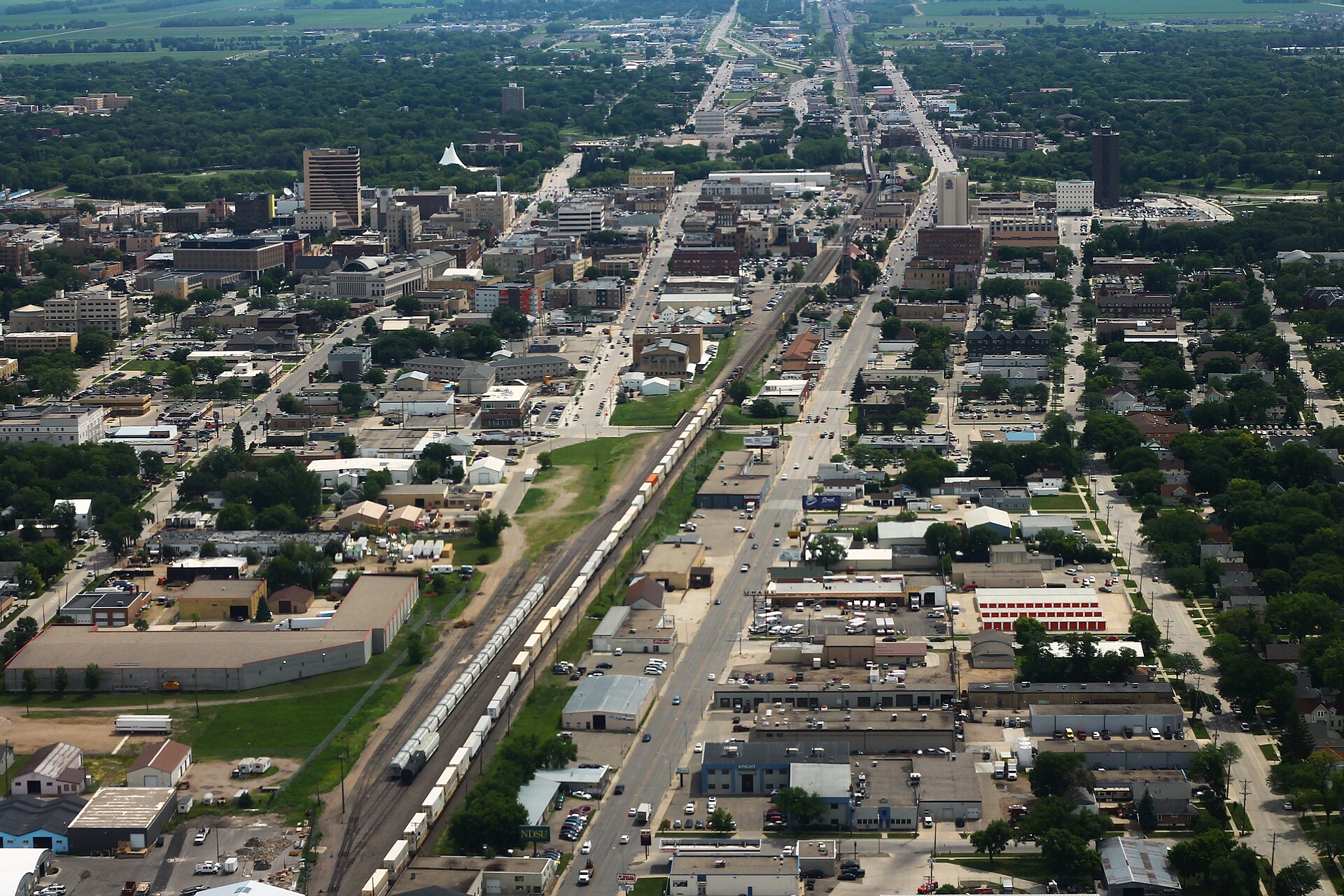
Fargo is North Dakota's largest city and its primary job market for MSW graduates. Sanford Health and Essentia Health, the two dominant health systems in the Fargo-Moorhead metro, are the largest healthcare social work employers. The region's behavioral health network, including Prairie St. John's, Southeast Human Service Center (a state-operated facility), and a network of community mental health centers, employs a significant share of licensed clinical social workers in the state. Fargo's growing immigrant and refugee population, including large communities from Sudan, Somalia, and East Africa, has created demand for social workers with cross-cultural and multilingual competencies.
Bismarck, the state capital, is the center of North Dakota state government social services employment. The North Dakota Department of Human Services, including its Economic Assistance Division, Children and Family Services Division, and Behavioral Health Division, employs the largest concentration of public-sector social workers in the state. CHI St. Alexius Health and Sanford Health Bismarck are the primary healthcare employers in the capital region. The proximity of the Standing Rock Sioux Tribal headquarters at Fort Yates and the Three Affiliated Tribes at New Town extends the practice context for Bismarck-area social workers into tribal social services.
Grand Forks, home to UND, is the state's third-largest city and has its own social work market anchored by Altru Health System and the UND health professions programs. The Spirit Lake Nation at Fort Totten, approximately 75 miles southwest of Grand Forks, is the closest tribal social service employer to the UND campus. Western North Dakota, including Williston and Minot, has grown significantly due to Bakken oil development and has increasing demand for social workers in community mental health, substance abuse treatment, and family services.
Source: BLS Occupational Employment and Wage Statistics, North Dakota; North Dakota Board of Social Work Examiners.
What can you specialize in with an MSW in North Dakota?
You can specialize in Advanced Generalist and Clinical or Direct Practice with an MSW in North Dakota, the concentrations recorded with CSWE by one of the state's one accredited program. Programs across the state record two distinct concentrations in total.
Two concentrations are offered by a single program in North Dakota, including Advanced Generalist and Clinical or Direct Practice, so a student set on Advanced Generalist has one option in state rather than a choice of several. Concentration is the part of the curriculum that follows the generalist foundation year the Educational Policy and Accreditation Standards require of every accredited program.
Can you work full time while earning an MSW in North Dakota?
You can work full time while earning an MSW in North Dakota at the state's only accredited program, which records a part-time plan of study with CSWE: University of North Dakota.
A part-time plan spreads coursework over three or four years rather than two. It does not, however, make the field placement part time: the Educational Policy and Accreditation Standards require 900 hours of supervised field education for a master's degree, most of it during business hours, which is the constraint working students in North Dakota most often have to plan around. One program in the state also offers an online option.
How did we rank the MSW program in North Dakota?
We ranked the MSW program in North Dakota on the same seven-factor model used in the national ranking, applied identically to every accredited program in the state. The state ranking uses identical criteria and weights. No North Dakota-specific adjustments are made. For the full methodology, see our ranking methodology page.
Accreditation is 25% of the score because it is the only pass-or-fail factor here: North Dakota licenses no graduate of an unaccredited program. The accredited program here has held that status since 1991.
Weights: CSWE accreditation 25%, program leadership 15%, pathways 15%, delivery format 15%, employer signal 15%, cost 10%, reputation 5%. Each factor is defined in full on our ranking methodology page.
How do you become a licensed social worker in North Dakota?
You become a licensed social worker in North Dakota by completing a CSWE-accredited MSW, passing the ASWB examination at the level your license requires, and, for a clinical license, logging supervised hours afterwards. Licensing here is administered by the North Dakota social work licensing board. North Dakota offers more than one route to licensure, pick the branch that matches the kind of practice you want. License names, exams, and supervised-hour requirements come from the ASWB Social Work Regulatory Database.
Master's social work license route in ND
MSW → LMSW
- 1
Earn a CSWE-accredited MSW.
- 2
Pass the ASWB Masters exam and apply for the LMSW (Licensed Master Social Worker).
Clinical social work license route in ND
MSW → LCSW
- 1
Earn a CSWE-accredited MSW.
- 2
Complete 3,000 hours of supervised practice over up to 4 years and pass the ASWB Clinical exam, then apply for the LCSW (Licensed Clinical Social Worker), which authorizes independent clinical practice and clinical diagnosis.
North Dakota social work licenses at a glance
Master's license
Licensed Master Social Worker
Clinical license
Licensed Clinical Social Worker
Source: Association of Social Work Boards (ASWB) Social Work Regulatory Database, 2026. License requirements change, so always confirm current rules with the North Dakota licensing board before applying.
Common questions about MSW programs in North Dakota
Common questions about MSW programs in North Dakota, on accreditation, cost, format and licensure.
How many CSWE-accredited MSW programs are in North Dakota?
What do social workers earn in North Dakota?
What are North Dakota's social work licensing requirements?
Is the UND MSW program appropriate for students interested in tribal social work?
Can I complete the UND MSW program online from western North Dakota?
Where does the data on this page come from?
The data on this page comes from the sources below, and from nothing else: no commercial directories, no other ranking sites.
- CSWE Directory of Accredited Programs covers which North Dakota programs hold accreditation, the year each was first accredited, approved campus locations, concentrations, dual degrees and plan-of-study options.
- Individual program pages (.edu) supply curriculum detail, field-hour requirements, delivery format and cohort scheduling. Each program card links to the page it was written from.
- BLS Occupational Employment and Wage Statistics, North Dakota supplies the employment and wage figures in the job-market section, May 2025 release.
- ASWB Social Work Laws and Regulations Database supplies license names, examination levels and supervised-hour requirements, read 2026.
- Carnegie Classification of Institutions of Higher Education supplies the research classification used in the ranking model.
What are the best MSW programs near North Dakota?
The best MSW programs near North Dakota are in the neighboring states below, all CSWE-accredited. Licensure is state by state, so check a program across the border against the rules where you intend to practice.